

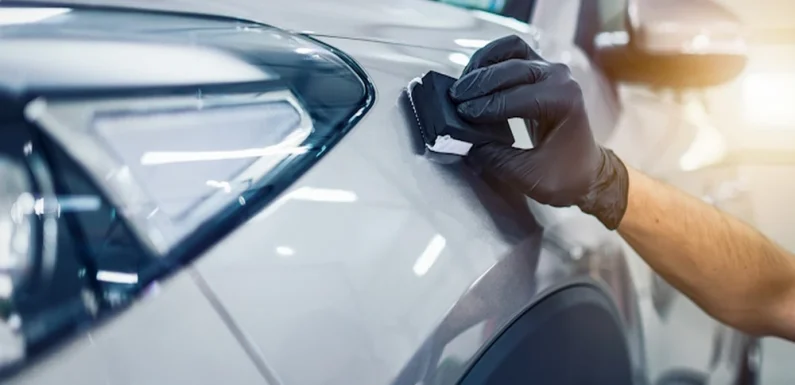
Colorado Springs sits in one of the most hail prone corridors in the country, and it is common for owners here to ask whether ceramic coating offers any real protection when a storm rolls through. Sales pitches sometimes blur the line, implying a coated car will come through a storm unscathed, which sets owners up for a frustrating surprise the first time a real hailstorm hits. The short answer involves separating two very different kinds of damage that hail causes, since coating meaningfully helps with one and does essentially nothing for the other.
What Two Kinds of Damage Does Hail Actually Cause?
The first is denting, where hailstones physically deform the sheet metal beneath the paint, leaving the small round depressions most people picture when they think of hail damage. The second is surface damage, including fine scuffing, paint chipping, and clear coat abrasion caused by hail grazing across the surface at an angle or being blown sideways by wind during a storm. These are fundamentally different problems with different solutions.
Which Type Does Coating Actually Address?
Coating adds real surface hardness, which helps resist the fine scuffing and clear coat abrasion that comes from hail grazing across paint, along with making the mud and grime a storm often kicks up easier to rinse away afterward. It does nothing for actual denting, since that damage happens to the metal panel underneath, not the paint surface itself.
Why Doesn’t Coating Stop Denting?
Ceramic coating is measured in microns, an extremely thin layer even after multiple applications. A direct hailstone impact carries far more force than a coating of that thickness could ever absorb or redirect, regardless of how hard or durable the product claims to be. Stopping a dent requires something that can absorb real impact energy, which is simply outside what a chemical coating is designed to do.
What Actually Helps With Dent Risk During Hailstorms?
Paint protection film adds a bit more physical cushioning than coating alone, though even that has limits against a significant hailstorm. For drivers specifically researching car ceramic coating colorado springs options ahead of storm season, it helps to know upfront that coating protects gloss and clear coat integrity, not the metal panels underneath. The most effective protection against denting by far is simply keeping the car under cover, whether that is a garage, carport, or a portable car cover reserved for storm warnings.
Does Covered Parking Make That Much of a Difference?
Covered parking during an active hail warning is more effective at preventing dents than any product applied to the paint, since it removes the exposure entirely rather than trying to withstand the impact. Even a carport or a thick blanket thrown over the hood in a pinch can meaningfully reduce damage compared to a car left fully exposed.
Is Coating Still Worth It If It Will Not Stop Dents?
Coating remains worthwhile for the UV resistance, surface hardness, and easier post storm cleanup it provides, even though dent prevention is not part of what it does. Setting the right expectation upfront, protection for the paint’s surface and gloss rather than the body panels themselves, helps owners avoid feeling misled after their first hailstorm.
Should You File an Insurance Claim for Hail Damage Separately?
Dent damage from a significant hailstorm is typically handled through a comprehensive insurance claim and paintless dent repair, a completely separate process from anything related to coating or film. Coating does not affect a claim either way, since insurers evaluate dents based on the condition of the metal panel itself, not whatever protective product sits on the surface above it, so there is no need to disclose or worry about the coating during that process.
Does Coating Make Paintless Dent Repair Harder?
Paintless dent repair works by gently massaging the metal back into shape from behind the panel, and a properly cured coating does not interfere with that process in any meaningful way. Technicians performing paintless repair on a coated vehicle generally treat it the same as an uncoated one, since the coating sits above the metal being reshaped rather than affecting the repair itself.
Hail damage in Colorado Springs almost always comes in two forms, and coating only addresses one of them. Knowing that distinction before a storm hits helps set realistic expectations, and pairing coating with covered parking during hail season covers both types of risk far better than either approach on its own.
